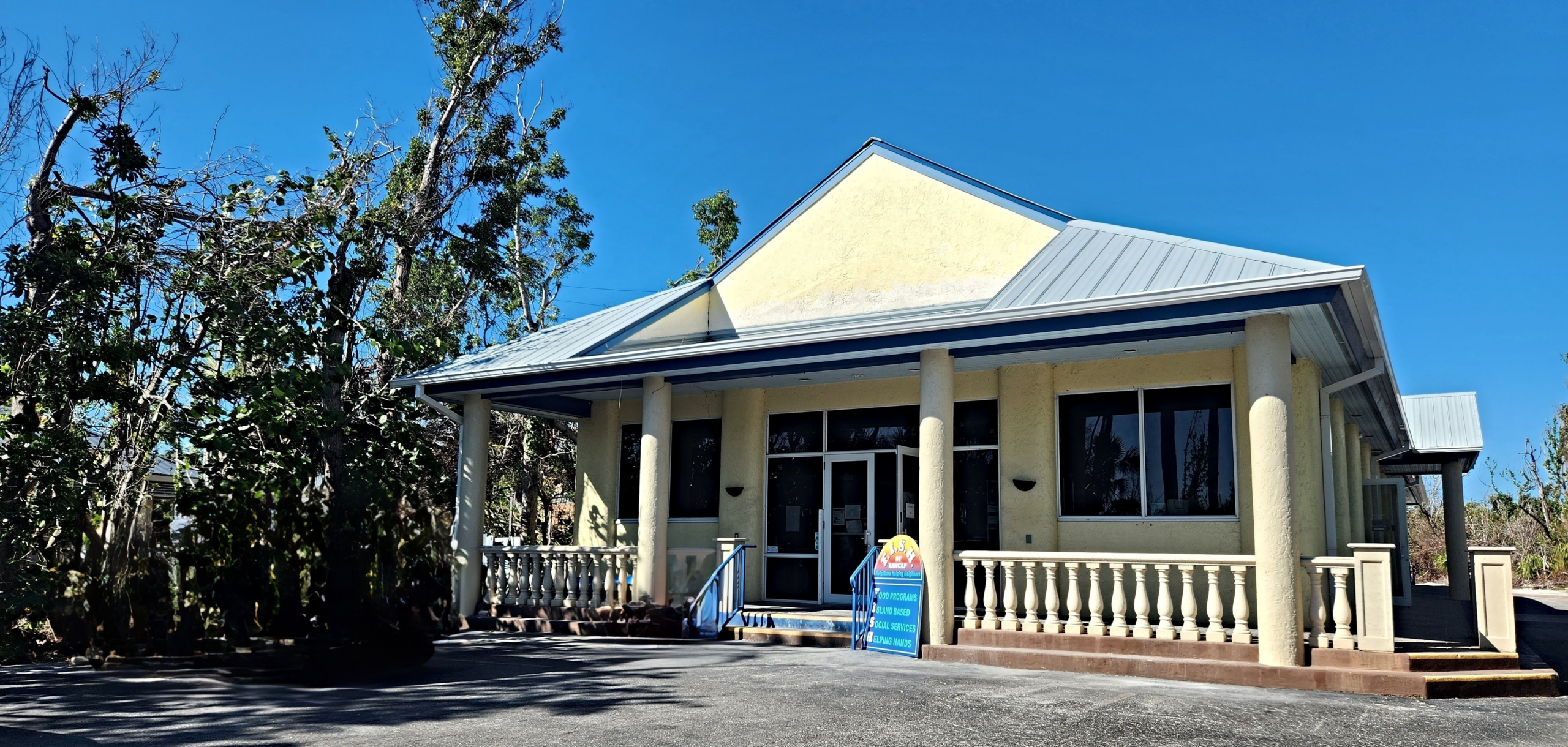
As planning for the FISH of SanCap Resiliency Hub continues, community members requested details to better understand how the project is funded, what federal funding will cover and what additional support may be needed.
Those questions emerged in FISH’s recent Resiliency Hub Community Survey, which received 172 responses. When asked what they would most like to better understand about the facility, 54.7% selected what additional community support may be needed, 41.9% selected how the project is funded and 33.1% selected what the federal grant covers. FISH is using that feedback as an opportunity to provide more information about the financial structure behind the project.
Following Hurricane Ian, which destroyed FISH’s former building in 2022, FISH was awarded $6,990,294 in Community Development Block Grant Disaster Recovery (CDBG-DR) funding toward the Resiliency Hub project. The federal funding is administered locally through the City of Sanibel, with FISH serving as the subrecipient.
“This is a significant investment in FISH and in the future of Sanibel and Captiva, and the community should understand how it works,” said Maria Espinoza, FISH Executive Director. “The survey showed that people have questions about the grant, the total project cost and what may be needed beyond the federal funding. FISH wants to answer those questions as clearly as possible.”
The CDBG-DR award is reimbursement funding. FISH must follow federal and local requirements for eligible project expenses and documentation before approved costs are reimbursed. The funding is designated for eligible costs associated with the Resiliency Hub project and cannot simply be redirected to other FISH programs or operating expenses.
Current project planning includes a storm-resistant facility designed to strengthen FISH’s Food Programs, Island-Based Education, Senior Services, and Helping Hands programs. Plans include expanded food storage and distribution capacity, space for senior programming and community partners, a warming kitchen for feeding programs and emergency use, and generator capacity to help FISH continue operating during emergencies.
As design work has progressed, preliminary estimates indicate that the total cost of the project could exceed the $6.99 million federal award. “The federal grant provides an important foundation for this project, but it does not mean every project expense will necessarily be covered,” Espinoza said. “FISH has a responsibility to understand the full cost and make careful decisions about the facility.”
The survey showed strong community support for the Resiliency Hub and also provided direction about what respondents believe should receive priority. Food security was selected by 83.1% of respondents, senior services by 73.8% and disaster preparedness and recovery by 71.5%. Respondents also encouraged FISH to consider accessibility, efficient pantry operations, backup power, flexible program space, privacy for clients, staff and volunteer work areas and the ability to adapt as community needs change.
Those priorities are helping FISH evaluate the project as design and funding decisions continue. “FISH heard that the community wants to understand the decisions being made and the resources behind them,” Espinoza said. “That feedback is useful. FISH will continue sharing information as the plans, costs and funding picture become clearer.”
FISH will provide additional Resiliency Hub updates as the project moves through design, review and construction planning.
For more information about FISH services and its Resiliency Hub planning, contact Maria Espinoza, Executive Director, FISH at maria@fishofsancap.org or 239-472-4775.