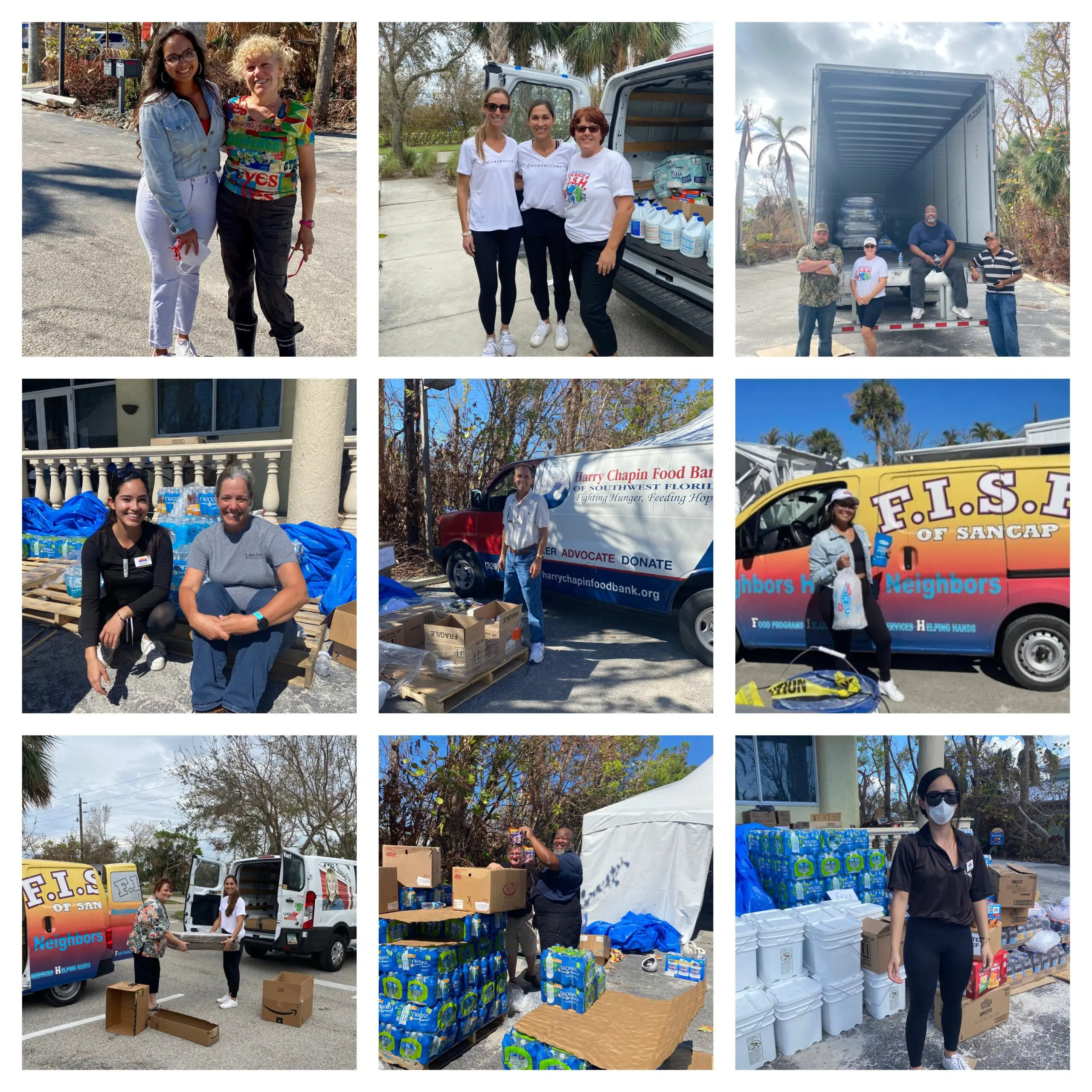
Sanibel and Captiva residents know how quickly everyday community needs can change following a hurricane or other emergency.
That experience is helping shape planning for FISH of SanCap’s Resiliency Hub, a year-round facility designed to serve the community during both “blue skies” and “grey skies.” During blue skies, the Hub supports FISH programs and services offered throughout the year. During grey skies, it will help FISH maintain those services while supporting emergency response and recovery efforts.
In FISH’s recent Resiliency Hub Community Survey, among 172 respondents, 71.5% selected disaster preparedness and recovery as a community need FISH should prioritize. When asked which challenges will have the greatest impact on Sanibel and Captiva, disaster preparedness ranked first at 61.6%. Respondents also identified climate and environmental resilience at 51.2%.
“FISH has learned through Ian, Helene and Milton how quickly community needs change after a storm,” said Maria Espinoza, FISH Executive Director. “The Resiliency Hub is being planned for both sides of that experience. It needs to work for the community every day and give FISH the capacity to respond when an emergency changes what our neighbors need.”
Hurricane Ian changed how FISH delivered services, requiring the organization to adapt quickly while continuing to meet everyday needs and respond to a community in recovery. That experience continued through Hurricanes Helene and Milton, when FISH again balanced ongoing programs with changing needs before, during and after the storms. Those experiences are helping inform the Resiliency Hub planning, along with direct community feedback.
Survey respondents identified backup power, emergency functionality, resilient construction, food and supply distribution, and the ability to maintain services when normal systems are disrupted as important considerations for the facility.
The planned Resiliency Hub includes emergency power capabilities and expanded food storage and distribution capacity. During regular operations, those resources will support FISH’s food programs, senior services, educational programs, financial assistance and other community services. The facility will also provide space for community partners and programs.
When an emergency occurs, those same capabilities will help FISH continue essential services, distribute food and supplies, work with community partners and respond as needs develop. This blue skies and grey skies approach allows the Hub to serve the community year-round while strengthening FISH’s ability to respond during emergencies and long-term recovery.
FISH is planning the project with support through a federal Community Development Block Grant Disaster Recovery (CDBG-DR) reimbursement grant.
The survey also showed that residents want to better understand this part of the project. Forty-three percent of respondents said they would like more information about how the Hub will support disaster recovery and resilience. FISH plans to continue sharing information about the Hub, its year-round community role and its emergency capabilities as design and planning continue.
“Resilience starts with being prepared before an emergency happens,” Espinoza said. “The goal is a Hub that is useful to our neighbors throughout the year and ready to support the community when circumstances change.”
For more information about FISH services and its Resiliency Hub planning, contact Maria Espinoza, Executive Director, FISH at maria@fishofsancap.org or 239-472-4775.