A recent report from the Federal Reserve Bank of New York found a “remarkable increase in food insecurity,” particularly among lower income households, families with children, and those already facing financial strain. Researchers also found growing pessimism about the future, as more households reported dipping into savings, relying on food donations, and struggling to put enough food on the table. According to NPR’s reporting on the findings, more people are going hungry now than at the height of the pandemic.¹
At FISH of Sanibel-Captiva, those national trends reflect what staff and volunteers hear every day. Families who once donated groceries are now asking for help. Seniors on fixed incomes are making difficult choices between groceries, medications, and utility bills. Working adults with full time jobs are finding that paychecks no longer stretch far enough to cover rising expenses.
“Our clients tell us they are doing everything they can,” said Merari Puente, Food Programs Manager at FISH. “They are working, budgeting, cutting back, and making sacrifices. Yet many still find themselves short at the end of the month. People are worried that the financial strain will last much longer than expected.”
According to the New York Fed, increases in food insecurity have been seen across age, race, and income groups, with the largest increases among households with children and those with lower incomes. Researchers noted that higher costs for groceries, housing, utilities, and other essentials continue to put pressure on household budgets. Those pressures are familiar on Sanibel and Captiva.
“Many of the households turning to FISH are considered ALICE households, which stands for Asset Limited, Income Constrained, Employed,” continued Puente. “They are teachers, hospitality workers, retail employees, caregivers, health care workers, tradespeople, and others who keep our community running every day. They earn too much to qualify for many forms of assistance, yet not enough to absorb rising costs for groceries, fuel, housing, insurance, and other essentials.”
Many island residents and members of the workforce are still recovering from the lasting effects of Hurricanes Ian, Helene, and Milton. Savings that once provided a financial cushion have been used up and, for many families, have yet to recover. Some households continue to deal with repairs, insurance challenges, housing instability, and lost income. “There is a misconception that food insecurity looks a certain way,” said Puente. “The reality is that it can affect anyone. We meet seniors who have lived here for decades, parents working multiple jobs, people caring for aging family members, and neighbors who never imagined they would need to visit a food pantry. Asking for help can be difficult, but no one should have to face hunger alone.”
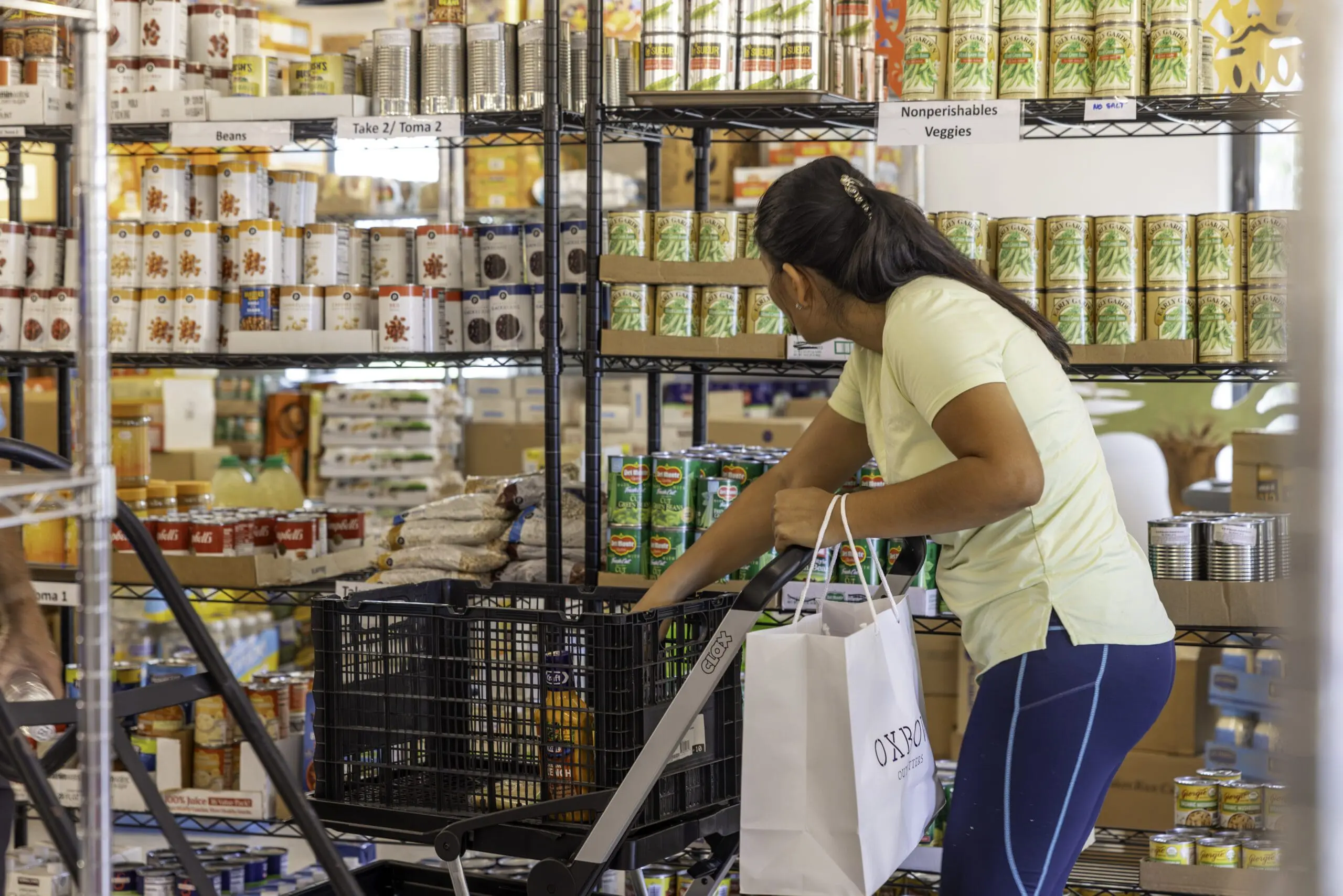
FISH’s choice food pantry provides groceries, fresh produce, frozen proteins, dairy products, hygiene items, pet food, and other essentials to island residents and workers facing both temporary hardships and ongoing financial challenges. In 2025, FISH recorded nearly 7,000 food pantry visits, along with thousands of holiday meals and supplemental food distributions through its Youth Backpack Program and Meals by FISH home delivered meal program. Demand has remained steady as many households continue to rebuild financially.
FISH’s Food Pantry program is partially funded by The Sanctuary Golf Club Foundation and strengthened through partnerships with Midwest Food Bank, Harry Chapin Food Bank, the Sanibel Island Farmers Market, private food drives, and generous in-kind donations from individuals, businesses, and community groups. These partnerships help provide a steady supply of food and household essentials, but community support remains critical as demand continues. Summer often brings an added challenge, as many seasonal residents leave the islands and food drives and in-kind donations become much less common while families continue to rely on the pantry.
FISH is also grateful to be one of the beneficiaries of the month-long Love Sanibel Back Food & Basics Drive. Running June 29 through August 2, the community wide collection drive invites neighbors to donate food and household essentials to help stock the FISH pantry while also supporting welcome baskets for new residents through Community Housing & Resources (CHR). Donations for FISH include pantry staples such as pasta, peanut butter, cereal, flour, cooking oil, paper towels, toilet paper, hygiene products, pet food, condiments, and jelly. Donations may be dropped off at FISH, CHR, Blind Pass Condominiums, Royal Shell, Sanibel Beach Club, Shalimar Beach Resort, Sanibel Day Spa, Jerry’s Foods, and Fyzical throughout the campaign.
Donations of nonperishable food items, hygiene products, and financial contributions allow FISH to purchase fresh foods and respond quickly to changing needs. “Food is one of the most basic needs we all share,” said Puente. “A bag of groceries can ease stress, stretch a paycheck, and remind someone they have a community that cares. Every donation helps us continue saying yes when our neighbors need support.”
Food donations may be dropped off at the FISH Walk In Center, located at 2422 Periwinkle Way on Sanibel. Financial contributions may be made online or mailed to P.O. Box 58, Sanibel, FL 33957, to support ongoing food assistance efforts.
For more information about accessing pantry services or making a donation, contact Merari Puente at merari@fishofsancap.org or call (239) 472-4775.