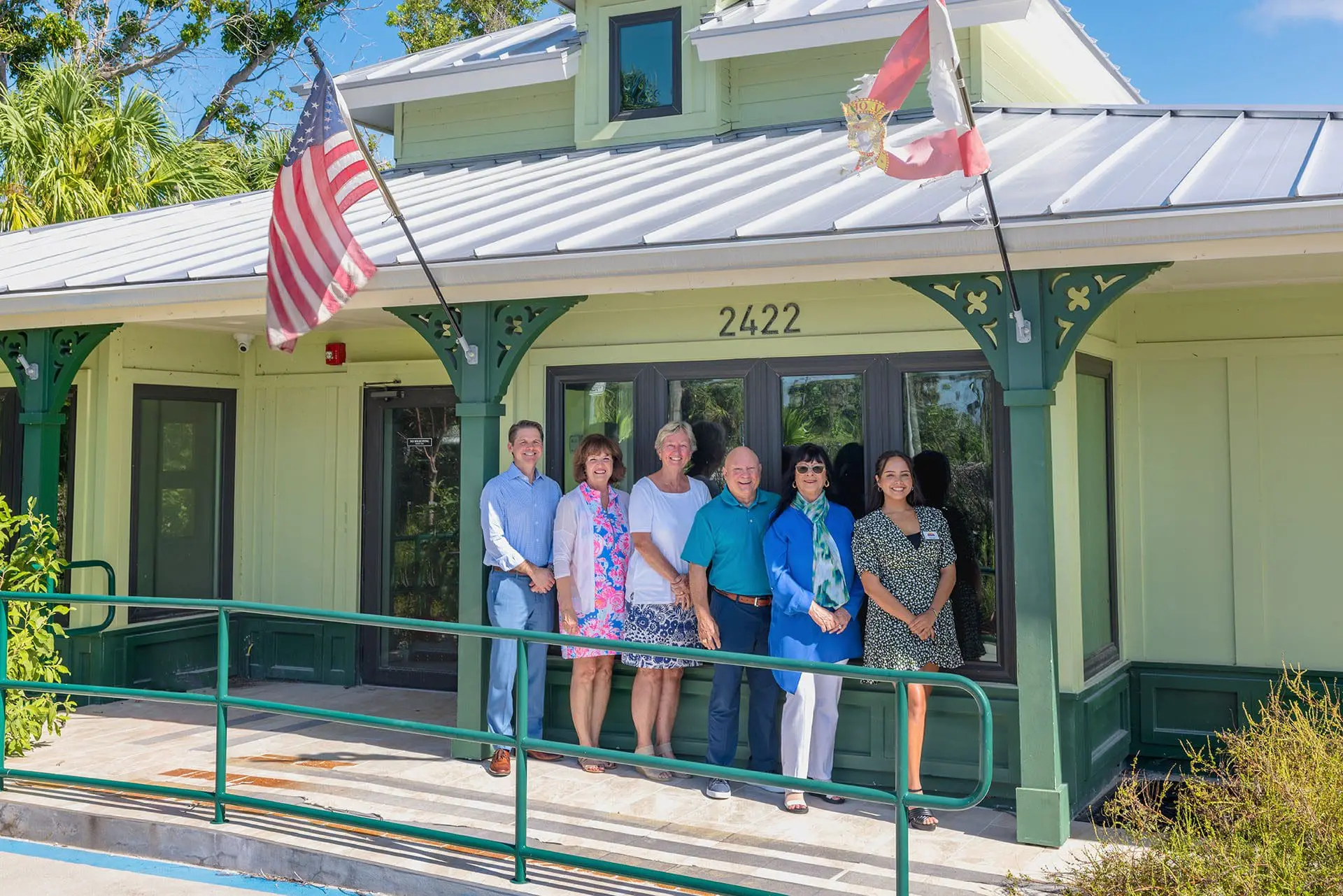
In a community survey last month, FISH of SanCap asked the community what it wants and needs from the organization’s planned Resiliency Hub. With 172 survey responses received, several priorities came through loud and clear: food security, senior services, disaster preparedness and a facility that can continue serving Sanibel and Captiva as community needs change.
FISH has served as a United Way Resiliency Hub since 2024, when United Way of Lee, Hendry, and Glades rebranded its network of United Way Houses as Resiliency Hubs. FISH has been part of that network, previously known as a United Way House, since 2009. The designation reflects the role FISH plays in supporting the community in good times and bad, providing year-round programs and services while preparing for and responding to community needs before, during and after disasters. FISH’s planned Resiliency Hub will remain a FISH facility, operated by FISH staff and volunteers, while continuing its role within the United Way Resiliency Hub network.
The FISH Resiliency Hub Community Survey invited residents, donors, volunteers, workforce members, businesses, clients and community partners to weigh in on the facility and the community needs it should help address over the next 10 to 20 years.
Among respondents, 47.7% said the facility will be extremely important to the future of Sanibel and Captiva, while another 30.8% described it as very important.
“The survey gave FISH exactly what was needed at this stage of planning: a better understanding of what people value, what they are concerned about and what they still want to know,” said Maria Espinoza, FISH Executive Director. “The responses will help guide planning and also show FISH where the organization needs to communicate more clearly.”
When asked which community needs FISH should prioritize over the next 10 to 20 years, 83.1% selected food security, 73.8% selected senior services and 71.5% selected disaster preparedness and recovery. Emergency financial assistance followed at 53.5%. Those priorities closely reflect the work FISH provides today through its Food Programs, Island-Based Education programs, Senior Services, and Helping Hands.
Open-ended responses offered additional direction. Respondents discussed senior-friendly and accessible design, pantry storage and refrigeration, backup power, flexible program space, privacy for clients, staff and volunteer workspace and the ability to continue providing services during construction.
Several also encouraged FISH to stay focused on its mission and work with other organizations rather than duplicate services already available in the community.
“That was an important part of the feedback,” Espinoza said. “FISH heard support for strengthening what it already does well and for using partnerships to connect neighbors with additional resources, which we currently do. The Resiliency Hub planning keeps that focus in mind.”
Hurricane Ian destroyed FISH’s former building in 2022. FISH purchased the neighboring property so programs could continue while a long-term solution was developed. The organization is now planning its Resiliency Hub with support through a federal Community Development Block Grant Disaster Recovery (CDBG-DR) reimbursement grant.
The survey also showed that the community wants more information as the project progresses. Respondents identified services, project funding, construction timing, disaster resilience, the federal grant and continuity of services during construction among the topics they want to better understand. FISH plans to continue sharing information about each of these areas as design and planning move forward.
“The survey was one part of the conversation,” Espinoza said. “FISH will keep listening and keep sharing information as the project develops.”
For more information about FISH services and its Resiliency Hub planning, contact Maria Espinoza, Executive Director, FISH at maria@fishofsancap.org or 239-472-4775.